
Carotid Artery Disease
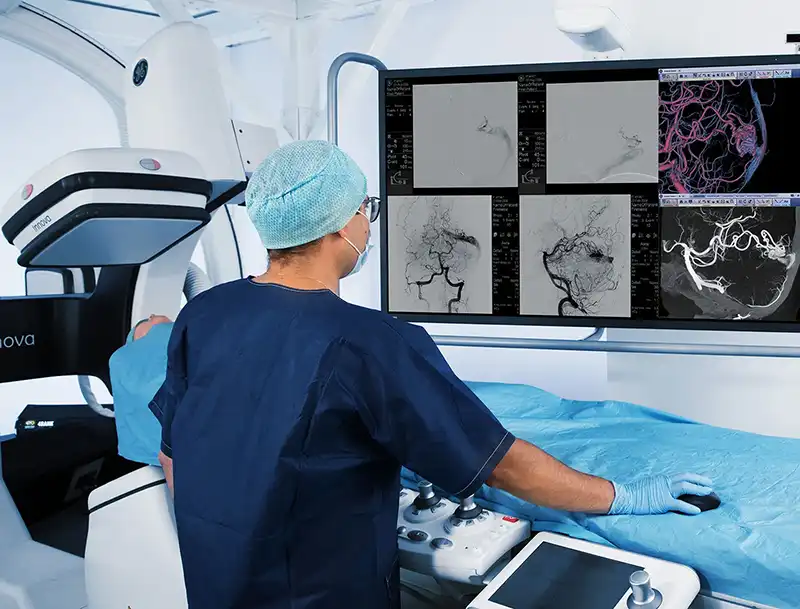
Carotid Artery Disease Overview
Inland Imaging’s interventional radiologists treat carotid artery disease, including two primary conditions: stenosis, an abnormal narrowing of a blood vessel caused by lesions that restrict blood flow, and emergent dissection, which occurs when a tear in the inner wall of the carotid artery creates separate channels that disrupt normal circulation.
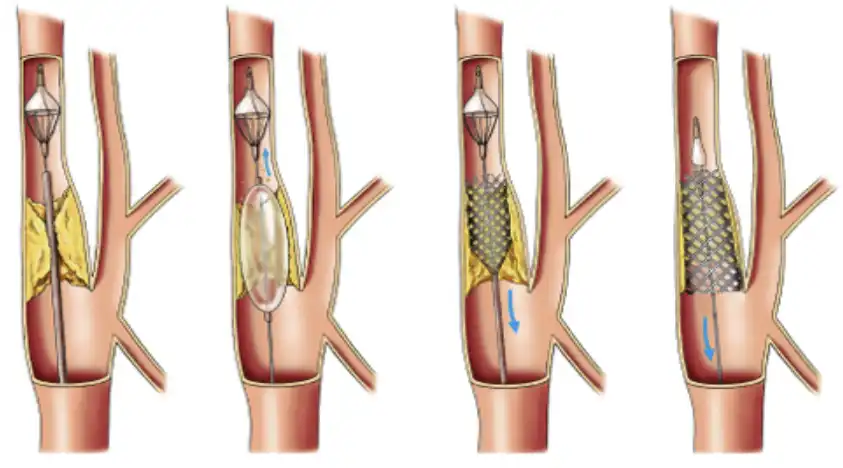
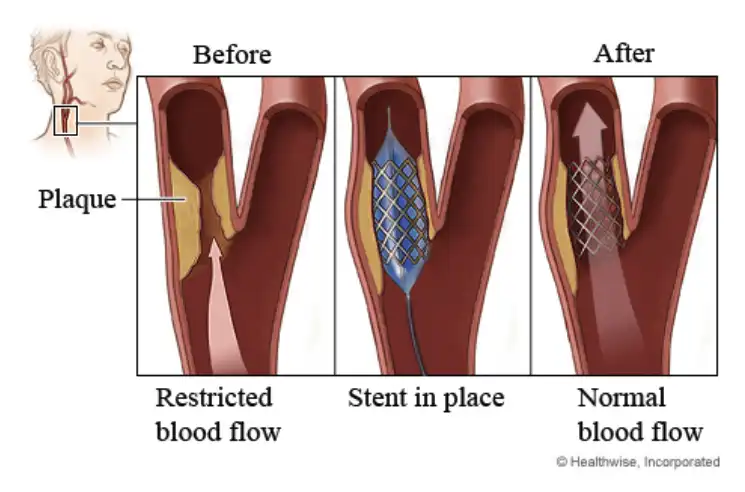
The primary treatment offered is carotid angioplasty and stenting, a minimally invasive procedure in which a small balloon-tipped catheter is used to open the narrowed artery, followed by the placement of a tiny mesh stent to keep it open. No large incision or general anesthesia is typically required.
Stenting Procedure
Following Your Angiogram and/or Stenting
You may be prescribed one or multiple of the following medications.
- Aspirin. Classically used as a pain relief aid, it can also be prescribed to patients at risk for blood clots in order to reduce the risk of heart attack and stroke. Aspirin reduces inflammation and can also prevent blood platelets from clumping together into a clot.
- Plavix. Plavix is also a very powerful anti-coagulation drug, which prevents platelets from clumping together into a clot. This drug is especially useful for preventing a clot, stroke, or heart attack in people with circulation problems (such as narrowing arteries).
- Pletal. The brand name for the drug cilostazol, which is a vasodilator. It widens the blood vessels by causing the smooth muscle surrounding the vessels to relax, relieving some of the symptoms of intermittent claudication.
- Statin. A wide class of drugs meant to reduce overall cholesterol levels. They lower the levels of lipids in the blood and reduce the risk for heart attack and stroke by reducing the amount of plaque that builds up on the arterial walls.

Frequently Asked Questions
What is Carotid angioplasty and stenting?
Angioplasty and stenting is a procedure performed on a narrowing in blood vessel, designed to improve blood flow through that vessel. During the procedure, the Interventional Radiologist uses a small tube with a balloon at the tip to open the narrowing in the blood vessel. A tiny mesh tube called a stent is then placed into the artery to keep the narrowing open. This is considered a minimally invasive procedure because there is no large incision and usually does not require the need for general anesthesia.
Why do I need a procedure on my Carotid artery?
The carotid artery is the primary blood vessel in your neck that supplies blood to your neck, face, and brain. A narrowing in this artery can slow the blood flow, which may cause a stroke or temporary stroke symptoms, known as a TIA. This narrowing is often caused by the buildup of plaque in the artery wall, or atherosclerosis. Narrowing in an artery wall can also be caused by radiation therapy used in cancer treatment, or with scar tissue as a result of prior neck or artery surgery. Angioplasty and stenting is performed for patients who have experienced a stroke or stroke symptoms due to a narrowed carotid artery, or for patients who are at risk for a stroke due to the severity of a narrowed carotid artery.
What causes Carotid artery narrowing?
Carotid artery disease is commonly caused by certain risk factors. These include:
- Smoking
- High blood pressure
- High cholesterol
- Diabetes
- Obesity
- Aging
- Family history
- Prior history of surgery on your carotid artery
- Neck and throat cancer treated with surgery or radiation
How is Carotid artery disease diagnosed?
Some signs of carotid artery disease are TIA symptoms like weakness or numbness/tingling in your face or extremities, temporary loss of vision in one eye, or a bruit, which is a sound heard with a stethoscope placed over the carotid artery. If you have had a stroke or any of these symptoms you may have a Doppler Ultrasound or a CT scan to evaluate the blood flow in your carotid arteries.
How is the procedure performed?
The procedure is performed at Sacred Heart Hospital by Dr. Zylak. He is a Neurointerventional Radiologist who specializes in the treatment of diseased blood vessels in the head and neck. The procedure is performed in the interventional suite using a special type of x-ray called fluoroscopy.
A nurse will be with you to administer pain and sedation medication to keep you comfortable and relaxed. During the procedure, the doctor will place a small tube through a tiny l incision or puncture site in the artery in your groin. The small tube, or catheter, is threaded through the Aorta to the carotid artery in your neck. A protection device that is shaped like a mesh umbrella is positioned in the carotid artery to help protect against plaque traveling to the brain and causing a stroke.
Then the balloon at the end of the catheter is inflated inside the narrowing, pushing the plaque up against the artery wall, or stretching the scar tissue. A stent may then be left in place to keep the narrowing open. After the procedure, the doctor will remove the tubes and seal access site in your groin artery with a special device designed to help prevent bleeding. You will be asked to lie still with your leg straight for 1-2 hours to let this blood vessel heal. The entire procedure will take approximately 1-2 hours.
What happens after the procedure?
After the procedure you will be taken to a room in the hospital to recover and be monitored for side effects from the procedure. You will be placed in the intensive care unit or the neurology unit where nurses can monitor your vital signs and observe for symptoms.
Most patients that undergo carotid angioplasty and stenting spend one night in the hospital and go home the next day. Although, not all carotid stenting stays in hospital and can be same day discharge. You will be discharged on two medications, commonly aspirin and Plavix, which are taken to prevent the formation of blood clots in your stent that could travel to your brain and cause a stroke. You may also be asked to take a cholesterol medicine known as a statin to help your artery heal and keep new plaque from developing in the stent.
It is very important that you take the medications prescribed after your procedure to prevent complications and recurrent narrowing in your carotid artery and new stent. You will be discharged home ambulatory and able to return to most activities within a few days.
What are the risks of Carotid artery angioplasty and stenting?
All procedures and surgeries have risks. Your risks may vary based on the severity of your carotid disease and symptoms, as well as other medical conditions you may have. For most patients the common risks include:
- Infection
- Bleeding
- Artery injury
- Stroke
- Heart Attack or arrhythmias
- Allergic reaction to contrast
- Kidney damage from contrast
- Low blood pressure or heart rate
- Recurrence of stenosis in the carotid artery
What are the alternatives to Carotid angioplasty and stenting?
Another option to treating a narrowing in a carotid artery is surgery called a Carotid Endarterectomy (CEA). This is
performed by a vascular surgeon and is performed by an incision along the artery to removes the plaque within the artery wall. The surgery is performed under general anesthesia. Your age, medical condition, carotid artery disease and symptoms, and prior treatment will determine if CEA or Carotid stenting is the right procedure for you.
Patient Testimonials
Dr. Jedidiah Schlung, Laura
“Especially to Dr. Schlung and Laura that took excellent care of me during my biopsy.”
Danelle
“She was great! Very good at positioning and explaining what she was doing or going to do and when to breathe. Good guidance through procedure.”
Dan, Paula
“This could have been an extremely uncomfortable appt. Dan and Paula explained everything very well and were very efficient. It was as painless as possible.”